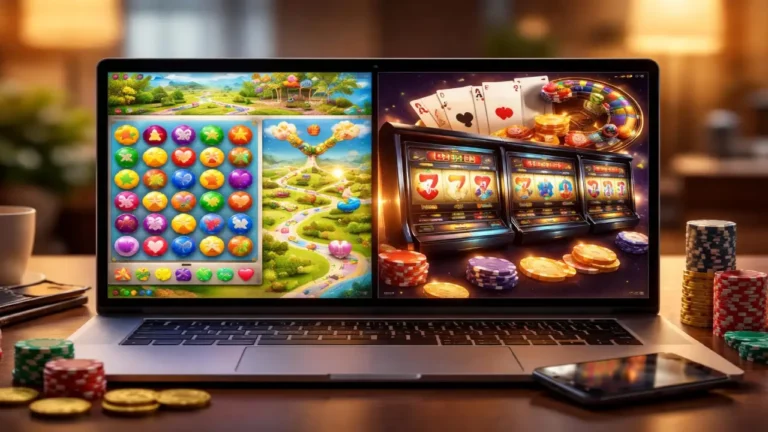

When you open an online casino and scroll through hundreds of slot games, you are looking at the work of dozens of independent companies, each with its own design philosophy, mathematical approach, artistic identity, and quality standards. These companies are called game providers or game studios, and they are the true architects of every slot experience you will ever have. The casino platform is the storefront. The provider is the craftsman who built the product on the shelf. Understanding who these providers are, what makes each one distinctive, and why the name behind a game matters as much as the theme on the screen is one of the most practical things a slot player can learn.
The reason providers matter so much is that they determine the three things that affect your experience more than any other factor: the mathematical model that governs how the game pays out, the visual and audio quality that defines how the game feels, and the mechanical innovation that determines whether the gameplay is genuinely engaging or just another generic spin. Two games with identical themes can deliver radically different experiences if they come from different providers, because the underlying mathematics, the animation quality, and the bonus design reflect completely different approaches to game creation. A casino running 500 games from top-tier providers will consistently outperform one padding its library with thousands of titles from studios that lack the talent, resources, or commitment to deliver genuine quality.
This guide profiles every major slot provider you need to know in 2026, explains what makes each one distinctive, and gives you the knowledge to evaluate game quality based on the name behind the title rather than just the screenshot on the lobby page.
The Tier-One Studios: Providers That Define the Industry
A handful of providers have earned their position at the top of the industry through decades of consistent quality, mathematical integrity, and creative innovation. These are the studios whose presence on a casino platform is itself a quality signal, because these companies do not licence their games to operators that could damage their brand through unethical practices. When you see their logo on a game, you can be confident in the fairness of the mathematics, the reliability of the technology, and the level of entertainment you are about to receive.
Pragmatic Play has established itself as arguably the most prolific and commercially successful slot provider in the world. Their output is extraordinary, releasing multiple new titles every month while maintaining a level of quality that most studios cannot match even at a fraction of that pace. Their signature games, including Gates of Olympus, Sweet Bonanza, The Dog House, and the Sugar Rush series, have become some of the most played slots in the global market. Pragmatic Play uses HTML5 for all development, ensuring full mobile optimisation, and their games are available in nearly 30 languages supporting most currencies worldwide. Their mobile-first development approach means that games are designed for smartphone screens first and then adapted upward to desktop, which reflects how the majority of players actually access their content.
NetEnt, now part of the Evolution Gaming group, is one of the oldest and most respected names in online slot development. Founded in 1996, the same year the first online casinos launched, NetEnt has been shaping the industry for nearly three decades. Their legacy titles including Starburst, Gonzo’s Quest, and Dead or Alive defined entire eras of slot gaming and remain popular today. NetEnt is known for exceptionally clean mathematical models, high base game hit rates, and visual polish that emphasises clarity and elegance over visual noise. Their games consistently rank among the highest-RTP titles available, which makes them a favourite among informed players who prioritise mathematical value alongside entertainment.
Play’n GO has carved out a distinctive identity through a combination of artistic ambition and mechanical innovation. Their portfolio includes some of the most visually creative slots in the industry, with titles like Moon Princess, Reactoonz, and Book of Dead showcasing art direction that rivals professional animation studios. Play’n GO pioneered the grid-clearing mechanic that has since been adopted across the industry, and their games tend to offer layered bonus systems that reward extended play with progressively richer features.
Evolution Gaming deserves inclusion as a tier-one provider despite being primarily known for live dealer content, because their acquisition strategy has assembled the most formidable collection of slot studios under a single corporate umbrella. By acquiring NetEnt, Red Tiger Gaming, Big Time Gaming, Nolimit City, and Ezugi, Evolution has created a content conglomerate that spans virtually every style and volatility level that the slot market demands. Big Time Gaming’s invention of the Megaways mechanic, which randomises the number of symbols on each reel to create up to 117,649 ways to win, remains one of the most significant mechanical innovations in slot history.
| Provider | Founded | Portfolio Size | Signature Style | Flagship Games |
|---|---|---|---|---|
| Pragmatic Play | 2015 | 300+ slots | High-frequency releases, mobile-first, broad appeal | Gates of Olympus, Sweet Bonanza, The Dog House |
| NetEnt | 1996 | 200+ slots | Clean mathematics, elegant visuals, high RTP | Starburst, Gonzo’s Quest, Dead or Alive |
| Play’n GO | 1997 | 300+ slots | Artistic ambition, innovative mechanics, grid games | Moon Princess, Reactoonz, Book of Dead |
| Microgaming | 1994 | 800+ slots (via network) | Largest portfolio, progressive jackpot pioneer | Mega Moolah, Immortal Romance, Thunderstruck II |
| Big Time Gaming (Evolution) | 2011 | 50+ slots | Invented Megaways, extreme volatility, massive max wins | Bonanza Megaways, Extra Chilli, White Rabbit |
| Red Tiger (Evolution) | 2014 | 200+ slots | Daily jackpots, polished visuals, medium volatility | Gonzo’s Quest Megaways, Piggy Riches Megaways |
| Nolimit City (Evolution) | 2014 | 70+ slots | Ultra-high volatility, dark themes, xMechanic system | San Quentin, Mental, Tombstone RIP |
The Innovators: Studios Pushing Creative Boundaries
Below the established tier-one studios sits a group of providers that have earned devoted followings through mechanical innovation, distinctive aesthetic identities, and a willingness to take creative risks that larger studios sometimes avoid. These studios may have smaller portfolios, but their influence on game design and player expectations is disproportionate to their size.
Hacksaw Gaming has rapidly become one of the most talked-about studios in the industry through a design philosophy that prioritises visual impact and high-volatility mechanics above all else. Their games feature bold, graphic art styles that stand out immediately in crowded casino lobbies, and their mathematical models tend toward extreme volatility with massive maximum win potential. For players who enjoy the thrill of chasing rare but enormous payouts, Hacksaw has become a go-to studio.
Push Gaming has built its reputation on mechanical depth and innovation. Their cluster pays games, cascading systems, and multi-layered bonus structures create gameplay experiences that feel genuinely different from traditional payline slots. Titles like Jammin’ Jars and Fat Rabbit demonstrated that creative mechanics combined with charming visual design could attract a loyal player base without relying on brand recognition or massive marketing budgets.
Relax Gaming operates both as a game provider and as an aggregation platform, which gives them a unique dual perspective on the market. Their own games, including the popular Dream Drop jackpot series, are well-regarded for their quality, while their distribution network provides smaller studios with access to hundreds of operators through a single integration.
Yggdrasil has established itself as one of the most technically ambitious studios in the market. Their proprietary game development framework enables features like in-game tournaments, cross-promotion between titles, and social sharing mechanics that most other providers do not offer. Their visual quality is consistently excellent, with a distinctive art style that blends 3D rendering with stylised character design.
| Provider | Founded | Portfolio Size | What Makes Them Special | Best Known For |
|---|---|---|---|---|
| Hacksaw Gaming | 2018 | 100+ slots | Bold visuals, extreme volatility, massive max wins | Wanted Dead or a Wild, Chaos Crew, Hand of God |
| Push Gaming | 2010 | 50+ slots | Innovative cluster mechanics, charming design | Jammin’ Jars, Fat Rabbit, Fire Hopper |
| Relax Gaming | 2010 | 100+ (own) + aggregated | Dual role as provider and aggregator, Dream Drop jackpot | Money Train series, Temple Tumble, Dream Drop |
| Yggdrasil | 2013 | 200+ slots | Technical innovation, in-game tournaments, social features | Vikings Go Berzerk, Valley of the Gods |
| Thunderkick | 2012 | 60+ slots | Quirky themes, unique art, unconventional mechanics | Esqueleto Explosivo, Beat the Beast series |
| ELK Studios | 2013 | 70+ slots | Cinematic presentation, mathematical precision | Kaiju, Cygnus, Ecuador Gold |
| Blueprint Gaming | 2001 | 150+ slots | Licensed themes, Megaways adoption, UK market strength | Fishin’ Frenzy, Eye of Horus Megaways |
Why the Provider Behind a Game Matters More Than the Theme
Many players choose slots based on visual theme alone: they see a game with Egyptian imagery, or a fruit-themed classic, or an anime-inspired grid game, and they click based on whether the artwork appeals to them. While there is nothing wrong with being attracted to a game’s visual identity, selecting games based on theme alone while ignoring the provider behind them is like choosing a restaurant based on the signage without checking who is cooking in the kitchen. The provider determines the quality of the meal. The theme is just the decor.
The provider determines the RTP. Different studios have different approaches to return-to-player percentages, and these differences compound significantly over time. Some providers consistently release games with RTPs above 96%, while others routinely publish titles in the 94% to 95% range. Over thousands of spins, this difference translates into meaningfully different bankroll performance. Providers also vary in how many RTP configurations they offer to operators, with some releasing games at a fixed RTP while others provide multiple versions ranging from generous to restrictive. Knowing which providers tend toward higher RTPs helps you prioritise the games most likely to give you better mathematical value.
The provider determines the volatility profile. Some studios are known for medium-volatility games that deliver balanced, enjoyable sessions. Others specialise in extreme volatility where the entire RTP is concentrated in rare bonus features. Understanding a provider’s typical volatility profile helps you select games that match your bankroll size and risk preference without needing to research every individual title.
The provider determines the fairness and certification standards. Tier-one providers invest heavily in independent testing and hold certifications from multiple accredited laboratories across dozens of jurisdictions. Their games are audited regularly, their RNGs are verified by independent bodies, and their payout percentages are confirmed through statistical analysis of millions of simulated rounds. Smaller or less reputable providers may hold fewer certifications, operate in fewer regulated markets, and provide less transparency about their testing processes.
| What the Provider Determines | Why It Matters to You | How to Check |
|---|---|---|
| RTP percentage | Directly affects your long-term bankroll performance | Check game info screen or provider’s official game page |
| Volatility profile | Determines session experience and bankroll requirements | Provider descriptions, independent review sites |
| Maximum win potential | Caps the biggest possible single payout | Listed in game info or paytable |
| Hit frequency | How often you land any winning result | Infer from volatility rating or demo play observation |
| Mobile optimisation | Quality of experience on smartphones | Test in demo mode on your actual device |
| Fairness certification | Confidence that outcomes are genuinely random | Look for eCOGRA, GLI, or iTech Labs certification |
| Bonus feature design | Creativity and entertainment value of special features | Play demo versions to experience features firsthand |
| Audio and visual quality | Overall sensory enjoyment of the experience | Immediately apparent when loading the game |

The Mathematics Behind Different Provider Philosophies
One of the most revealing ways to understand providers is through their mathematical philosophies, specifically how they distribute the RTP across base game play and bonus features. This distribution creates fundamentally different player experiences even when the overall RTP is identical, and it is one of the clearest differentiators between studio styles.
Some providers, exemplified by NetEnt’s classic approach, keep a relatively high proportion of the RTP in the base game. This means that regular spins produce winning combinations frequently enough to sustain your bankroll at a relatively steady rate, with bonus features providing additional value on top of a functional base game. Games built with this philosophy feel balanced and forgiving, with session lengths that tend to be longer and more predictable. This approach appeals to players who value steady entertainment over dramatic swings.
Other providers, particularly Nolimit City and Hacksaw Gaming, park the vast majority of their RTP inside bonus features that trigger infrequently but pay enormously when they do. The base game in these slots functions essentially as a slow drain where you are paying per spin for another chance at triggering the feature. When the bonus hits, the payout can be spectacular, potentially hundreds or thousands of times your bet. But the dry stretches between features can be brutally long, making these games unsuitable for small bankrolls or players who find extended losing sequences stressful.
Pragmatic Play occupies a middle ground that has proven commercially powerful. Their games typically offer enough base game value to keep sessions feeling active while concentrating the most exciting payouts in well-designed bonus rounds that trigger at reasonable intervals. This balanced approach appeals to the widest possible audience, which is a key factor in Pragmatic Play’s commercial dominance.
| Mathematical Philosophy | Base Game RTP Share | Bonus RTP Share | Session Feel | Provider Examples |
|---|---|---|---|---|
| Base game heavy | 60% to 70% | 30% to 40% | Steady, frequent small wins, long sessions | NetEnt, Playtech, IGT |
| Balanced distribution | 45% to 55% | 45% to 55% | Mix of regular wins and rewarding bonuses | Pragmatic Play, Red Tiger, Play’n GO |
| Bonus feature heavy | 20% to 35% | 65% to 80% | Dry base game, explosive bonus payouts | Nolimit City, Hacksaw Gaming, Push Gaming |
| Jackpot concentrated | 40% to 50% | 30% to 40% (+ jackpot) | Moderate base game, portion of RTP feeds progressive pool | Microgaming (Mega Moolah), Relax Gaming (Dream Drop) |
Game Mechanics That Define Provider Identity
Beyond mathematics, the specific gameplay mechanics a provider favours become their creative signature. Just as a filmmaker is recognised by their directorial style, a game provider is recognised by the mechanics they pioneer, refine, and return to across their portfolio. Understanding these mechanical signatures helps you predict what a game will feel like before you play it, simply by recognising the provider’s name.
Megaways, invented by Big Time Gaming and licensed to dozens of other studios, randomises the number of symbols appearing on each reel every spin, creating a dynamic grid where the number of ways to win changes constantly. A typical Megaways game can offer up to 117,649 ways to win on a single spin, compared to the fixed 20 to 50 paylines of a traditional slot. This mechanic creates a sense of possibility and unpredictability that has made Megaways one of the most popular and widely adopted innovations in slot history.
Cascading reels, also known as tumbling or avalanche reels, remove winning symbols after a payout and allow new symbols to fall into the empty spaces, potentially creating chain reactions of multiple wins from a single spin. This mechanic, popularised by NetEnt’s Gonzo’s Quest and refined by numerous providers since, adds a layer of anticipation to every win because the cascade might continue for multiple stages, building the total payout with each step.
Cluster pays mechanics replace traditional paylines with a system where wins are formed by groups of matching symbols appearing adjacent to each other on the grid. This approach, championed by Play’n GO and Push Gaming, creates a more organic, puzzle-like gameplay experience where the entire grid becomes a playing field rather than being divided into rigid horizontal lines.
The bonus buy feature, which allows players to pay a premium to trigger a game’s bonus round immediately rather than waiting for it to activate naturally, has become a defining feature for high-volatility studios. Hacksaw Gaming, Nolimit City, and Pragmatic Play all offer bonus buy options on many of their titles, giving impatient players or those with larger bankrolls the option to skip directly to the game’s most exciting feature.
| Mechanic | How It Works | Invented/Popularised By | Player Experience |
|---|---|---|---|
| Megaways | Random reel modifier creating up to 117,649 ways to win | Big Time Gaming | Dynamic, unpredictable, high-excitement grid |
| Cascading reels | Winning symbols removed, new ones fall in, chain reactions | NetEnt (Gonzo’s Quest) | Anticipation builds with each cascade step |
| Cluster pays | Wins from adjacent matching symbol groups, no paylines | Play’n GO, Push Gaming | Organic, puzzle-like grid interaction |
| Bonus buy | Pay premium to trigger bonus round immediately | Multiple studios | Skips base game, immediate high-volatility action |
| xMechanic (xWays, xNudge, xBomb) | Suite of linked mechanics that modify the grid | Nolimit City | Complex, layered interactions, extreme volatility |
| Sticky wilds | Wild symbols remain locked for subsequent spins | Various, refined by Quickspin | Building excitement through cumulative wild presence |
| Hold and Spin | Triggered symbols lock, respins attempt to add more | Lightning Link, adopted widely | Collection mechanic with visible progress toward prizes |
| Progressive multipliers | Multiplier increases with each consecutive win | Multiple studios | Escalating tension and growing payout potential |
How to Identify Quality Providers on Any Platform
When evaluating an online casino’s game library, knowing how to identify which providers are represented and what that tells you about the platform’s quality can save you from wasting time and money on inferior gaming experiences. Several practical indicators help you make this assessment quickly and accurately.
Check whether the platform lists its game providers prominently. Reputable casinos are proud of their provider partnerships and display them in their lobby filters, in their marketing, and on dedicated provider information pages. If a platform makes it difficult to identify which studios created its games, that may indicate a reliance on low-quality or uncertified content that the operator does not want scrutinised.
Filter the game library by provider if the platform offers this functionality. A casino that features extensive catalogues from Pragmatic Play, NetEnt, Play’n GO, Evolution group studios, and other recognised names is making a quality statement. A casino that features hundreds of titles from providers you have never heard of may be prioritising quantity over quality, filling its library with games that look acceptable in a thumbnail but deliver inferior mathematical models, lower RTPs, and less engaging gameplay.
Look for provider certification badges within individual games. When you open a slot and check its information section, the provider’s name and certification details should be clearly displayed. If this information is missing or vague, the game may not have undergone the independent testing and verification that reputable providers subject all of their titles to before release.
| Quality Indicator | What It Tells You | What to Watch For |
|---|---|---|
| Tier-one providers in the lobby | Platform has strong industry partnerships | Pragmatic Play, NetEnt, Play’n GO, Evolution group presence |
| Provider filter available | Platform is transparent about content sources | Easy way to browse games by studio |
| RTP displayed in game info | Provider and platform are transparent about mathematics | Exact percentage available within each game |
| Certification badges visible | Games have been independently tested and verified | eCOGRA, GLI, or iTech Labs logos or references |
| Regular new releases | Provider relationship is active and ongoing | New games appearing consistently from recognised studios |
| Demo mode available | Provider allows players to test before wagering | Free play option for most or all games in the library |
The Consolidation Trend and What It Means for Players
The online slot provider landscape has undergone significant consolidation over the past five years, with larger companies acquiring smaller studios to build broader content portfolios. The most notable example is Evolution Gaming’s acquisition spree that brought NetEnt, Red Tiger, Big Time Gaming, Nolimit City, and Ezugi under a single corporate umbrella, creating the most comprehensive content group in the industry.
For players, consolidation has both positive and negative implications. On the positive side, larger groups can invest more heavily in technology, certification, and quality control, potentially raising the standard across all of their subsidiary studios. Cross-studio innovation, where a mechanic invented by one studio is refined and applied by another within the same group, can accelerate the pace of creative development.
On the negative side, consolidation reduces the number of truly independent voices in the market, which could lead to homogenisation of game design over time. When a single corporate group controls a significant percentage of all slot content, the risk increases that financial optimisation takes priority over creative risk-taking. Independent studios like Hacksaw Gaming, Push Gaming, Thunderkick, and ELK Studios play a vital role in maintaining diversity and pushing creative boundaries that larger organisations might not pursue on their own.
The most important thing for players to understand is that a provider’s name on a game is a meaningful quality signal, and knowing the major names in the industry helps you navigate an increasingly crowded market with confidence. Whether you prefer the mathematical elegance of NetEnt, the prolific creativity of Pragmatic Play, the extreme volatility of Nolimit City, or the innovative mechanics of Push Gaming, the provider behind the game is the most reliable predictor of the experience you are about to have.